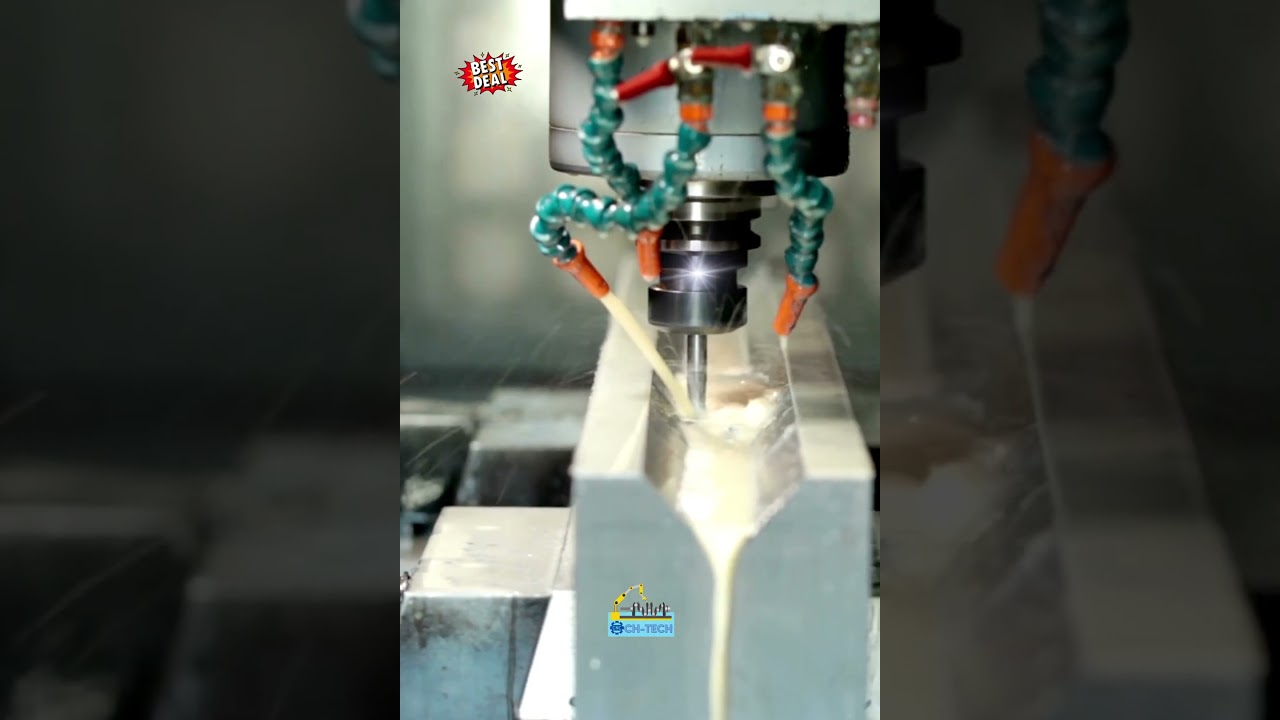
Mastering Precision: 7 Game-Changing Tips for Advanced CNC Control and Milling
This article provides an in-depth exploration of CNC control, covering foundational concepts, practical applications, and engineering insights.
In the world of tool and die making, precision isn't just a goal—it’s a requirement. Whether you are crafting intricate injection molds or heavy-duty stamping dies, the difference between success and a scrapped workpiece often comes down to the smallest details. To stay ahead in this competitive industry, mastering your CNC control system and refining your milling techniques is essential.
Here are seven game-changing tips that every tool and die professional should implement to elevate their machining game.
1. Optimize Your Toolpaths for Surface Finish
When working on complex die surfaces, the "stepover" is your best friend or your worst enemy. To reduce manual polishing time later, use a smaller stepover with a high-quality ball end mill. This ensures a smoother finish directly off the machine.
2. Leverage Advanced CNC Control Features
Modern machining requires more than just basic G-code. Professionals who take full advantage of their CNC control software—such as high-speed look-ahead functions—can achieve much smoother transitions and higher feed rates without sacrificing accuracy. This technology anticipates changes in direction, preventing the machine from "jerking" during tight cornering.
3. Prioritize Rigidity in Workholding
A tool is only as accurate as its setup. In tool and die work, even a micron of vibration can lead to premature tool wear or poor surface quality. Always use the shortest tool possible and ensure your workholding is as rigid as the machine frame itself.
4. Real-Time Feed Rate Adjustments
No matter how good your CAM simulation is, the "ear" of an experienced machinist is invaluable. Don't be afraid to fine-tune your settings. Being able to intuitively adjust feed rates via the CNC control interface during the initial cut can save a fragile tool from breaking when encountering unexpected material hardness.
5. Mastering Heat Management
Die steels are notoriously difficult to machine and generate significant heat. Use high-pressure coolant or specialized air-blast systems to clear chips immediately. Recutting chips is the fastest way to ruin a finish and dull your expensive carbide inserts.
6. Implement "Taper-Free" Deep Milling
When milling deep pockets in a die, tool deflection is inevitable. To combat this, use a "constant Z" strategy and consider semi-finishing passes that leave a consistent amount of stock for the final finish pass.
7. Regular Calibration and Maintenance
Precision tools require precision maintenance. Regularly check your spindle runout and axis backlash. A well-maintained machine ensures that the commands sent from your controller result in the exact physical movements required for high-tolerance tooling.
By focusing on these seven areas, you can transform your workflow from standard machining to elite-level tool and die production. Precision starts with the right mindset and ends with a perfect part.


