CNC vs. DNC Machine: How a DNC System Revolutionizes Manufacturing
This article provides an in-depth exploration of DNC system, covering foundational concepts, practical applications, and engineering insights.
In modern manufacturing, precision and automation are essential for maintaining a competitive edge. While Computer Numerical Control (CNC) technology has long been the backbone of automated machining, expanding industrial environments often require more centralized operational management. This is where a DNC system comes into play. Understanding the key differences between CNC and DNC machines can help manufacturers optimize their shop floor workflows and improve overall operational efficiency.
What is a CNC Machine?
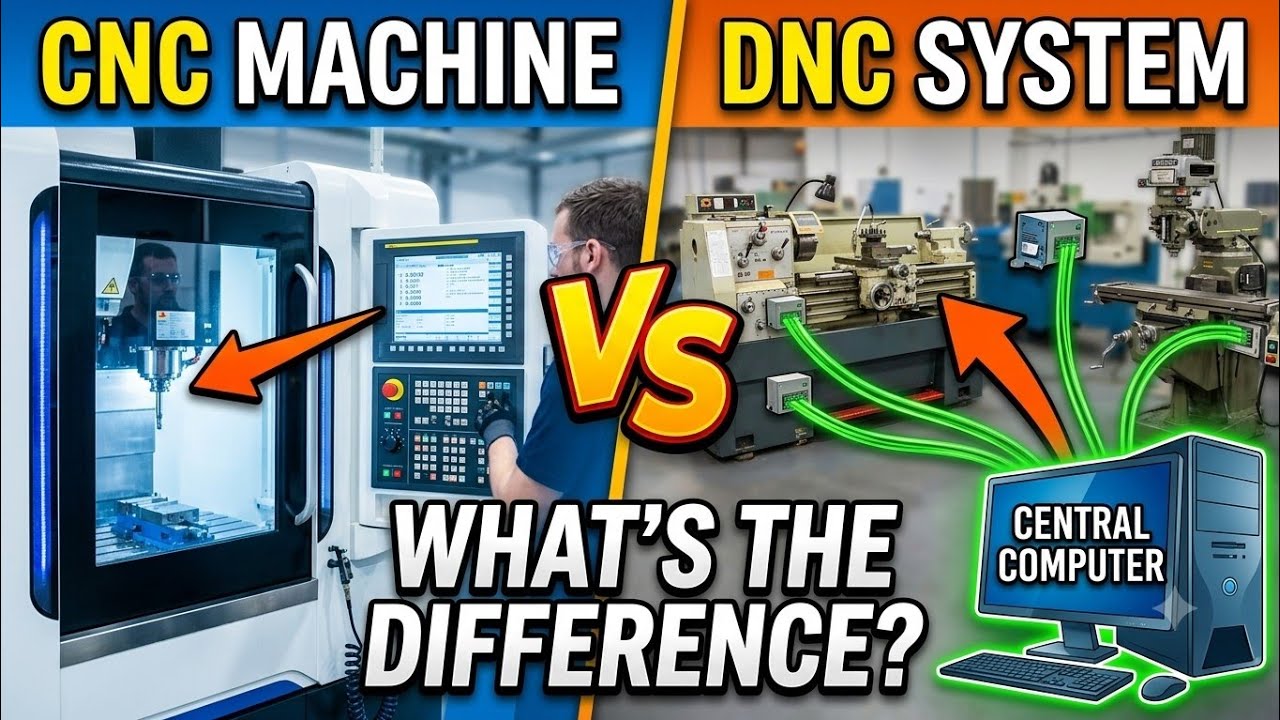
A CNC (Computer Numerical Control) machine operates using a dedicated internal computer to execute pre-programmed sequences of machining commands. Each CNC machine functions independently, relying on its own built-in controller and memory to process G-code for tasks such as cutting, milling, turning, or drilling. While CNC machines offer exceptional accuracy and repeatability, their local memory limits can restrict the size and complexity of the programs they can store and run at any given time.
What is a DNC System?
DNC stands for Direct Numerical Control (or Distributed Numerical Control). Unlike a standalone setup, a DNC system connects multiple numerical control machines to a central host computer network. Instead of loading programs individually into each machine's memory using physical drives or manual inputs, the central server manages and streams CAD/CAM instruction files directly to several machines simultaneously. This real-time streaming capability effectively bypasses the local memory limitations of individual machinery.
Key Differences: CNC vs. DNC
- Control Structure: A CNC machine relies exclusively on an onboard, single-board computer for operation. In contrast, a DNC setup coordinates and manages multiple shop floor machines from one centralized station.
- Data Handling: CNC machines store instruction programs locally within limited internal memory buffers. DNC networks handle large, complex program files remotely, streaming data on-demand.
- Flexibility and Scaling: DNC configurations enable centralized program editing, automated file transfers, and shop-floor data collection, whereas isolated CNC units require manual updates and individual maintenance.
Conclusion
Both CNC and DNC technologies play crucial roles in modern machining operations. While CNC machines deliver high-precision control for individual tasks, integrating a centralized DNC system empowers manufacturing plants to scale operations, manage file distribution efficiently, and maximize productivity across the entire factory floor.


