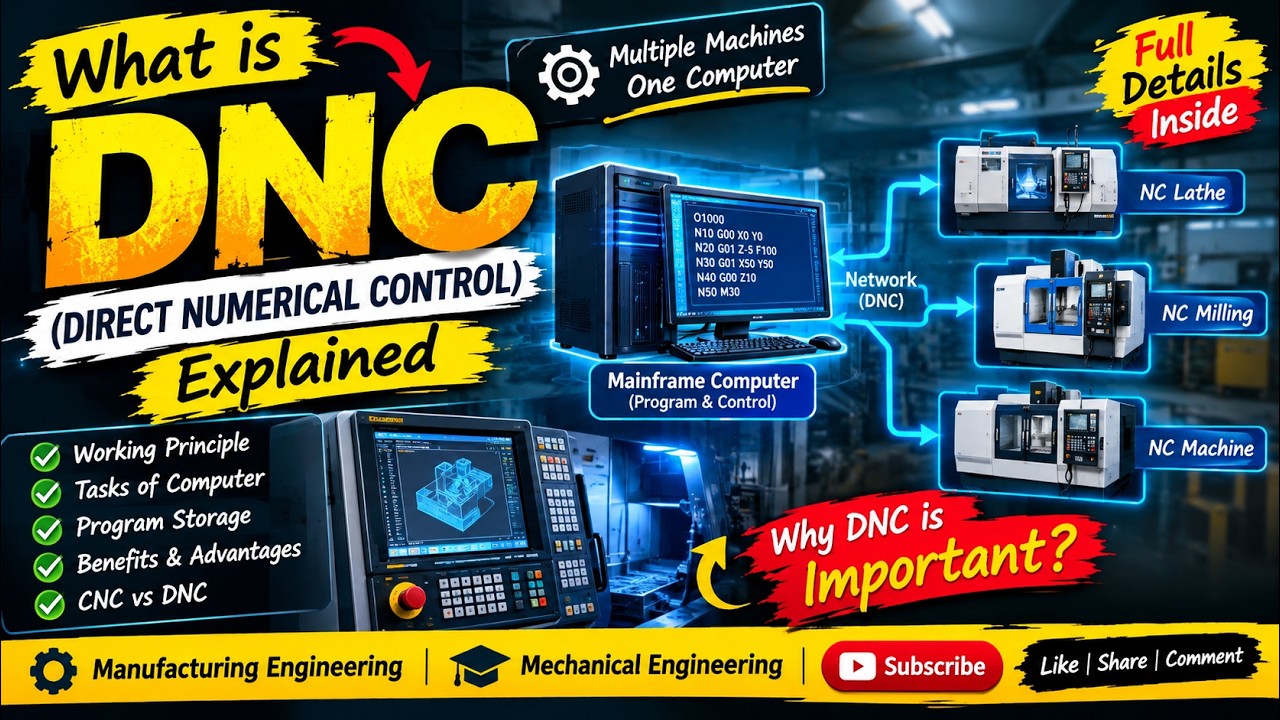
What is a DNC System? Direct Numerical Control Explained Simply
This article provides an in-depth exploration of DNC system, covering foundational concepts, practical applications, and engineering insights.
In modern manufacturing, precision and automation are the ultimate drivers of productivity. While Computer Numerical Control (CNC) revolutionized machining by replacing manual operations, managing large fleets of equipment requires a much more unified approach. This is where a DNC system—standing for Direct Numerical Control (or Distributed Numerical Control)—comes into play.
Understanding how Direct Numerical Control works and how it differs from traditional CNC setups is essential for optimizing modern shop floor operations.
What is Direct Numerical Control (DNC)?
Direct Numerical Control refers to a centralized manufacturing network where a single computer controls multiple numerical control (NC) or CNC machines simultaneously.
In traditional standalone setups, operators must manually transfer part programs into each individual machine using physical media like USB drives or local network drops. A DNC setup eliminates this hassle. The central server directly stores, manages, and transmits G-code and M-code programs to all connected machine tools on demand.
CNC vs. DNC System: Understanding the Difference
To appreciate the capabilities of a modern DNC system, it helps to compare it directly with standalone CNC machines:
- CNC (Computer Numerical Control): Focuses on individual machine intelligence. Each machine uses its own built-in computer to store and execute machining programs locally.
- DNC (Direct Numerical Control): Focuses on network management. It connects a network of individual CNC machines to a central computer, acting as a master library and data hub for all production code.
Key Advantages of Implementing a DNC System
Integrating a modern DNC system into a manufacturing environment provides several critical operational benefits:
- Centralized Program Management: All CAD/CAM programs are stored in a secure, central repository. This prevents version confusion and ensures machinists always run the latest approved file.
- Bypassing Memory Constraints: Legacy CNC machines often suffer from limited internal memory. DNC enables "drip-feeding" (Dynamic Data Transfer), streaming massive 3D machining files directly to the tool in real time.
- Reduced Downtime: Operators can call up required programs directly at the machine controller without leaving their workstation, drastically cutting setup times.
- Enhanced Data Security and Tracking: Centralized logging helps track file revisions, monitor machine usage, and prevent unauthorized tampering with production files.
Conclusion
Direct Numerical Control bridges the gap between individual machine tools and smart factory automation. By streamlining data distribution and eliminating manual file transfer risks, DNC technology ensures maximum uptime, enhanced security, and superior manufacturing efficiency across the entire shop floor.


