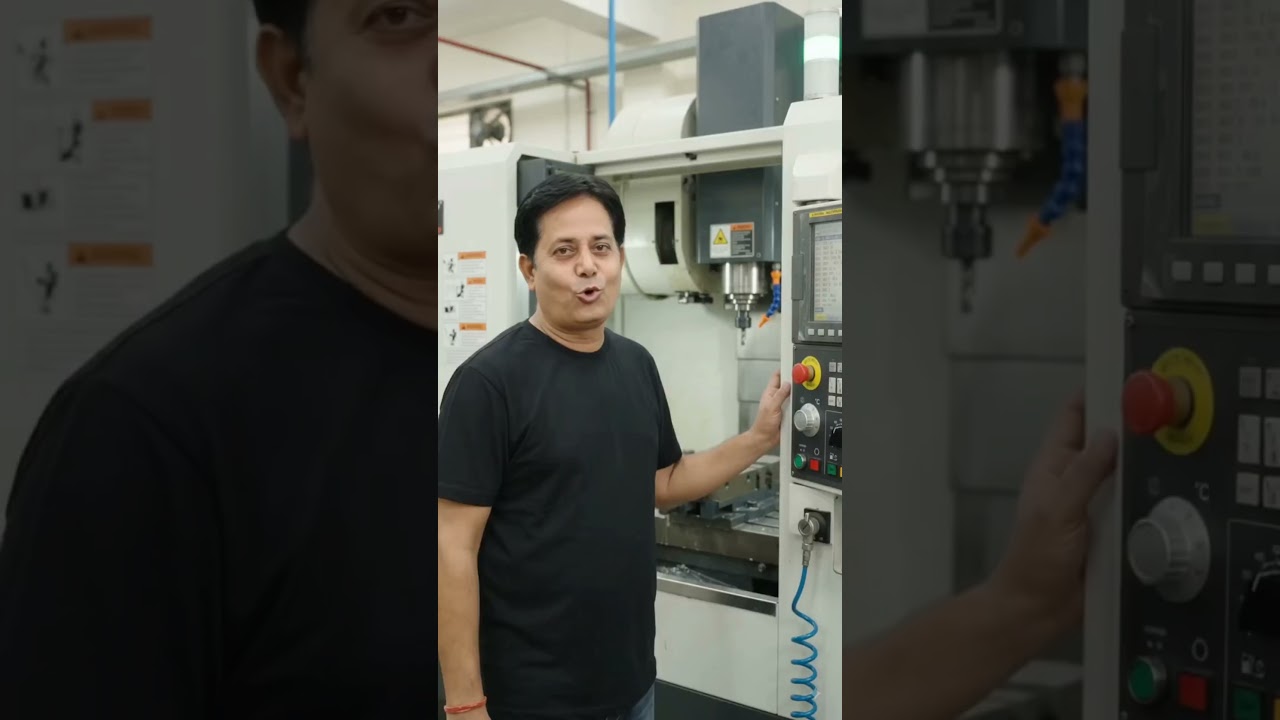
Demystifying VMC Programming: How G-Code Data and M-Codes Drive CNC Machining
This article provides an in-depth exploration of G-code data, covering foundational concepts, practical applications, and engineering insights.
Vertical Machining Centers (VMCs) are the backbone of modern precision manufacturing. Whether you are crafting intricate aerospace components or routine automotive parts, these computer numerical control (CNC) machines rely on precise instructions to operate effectively. At the heart of every successful machining operation lies a programming language dominated by two key elements: G-codes and M-codes. Understanding how to interpret and execute G-code data is essential for anyone looking to master automated manufacturing.
What is G-Code in VMC Machining?
G-code, short for Geometry code, is the primary language that controls the positioning and motion of the cutting tool. When an operator feeds structured G-code data into a VMC, the machine translates these numerical commands into precise linear or circular toolpaths along the X, Y, and Z axes.
Common examples of G-codes include:
- G00: Rapid positioning (moving the tool quickly to a location without cutting).
- G01: Linear interpolation (cutting material in a straight line at a controlled feed rate).
- G02 / G03: Circular interpolation (cutting arcs or rounded features clockwise or counterclockwise).
Without precise coordinates and feed rate instructions, the machine cannot accurately shape raw material into a finished part.
What is M-Code?
While G-codes manage the tool's geometric movement, M-codes (Miscellaneous codes) handle auxiliary machine functions. Think of M-codes as the switches that toggle hardware functions on or off during the machining cycle.
Essential M-codes include:
- M03 / M04: Spindle start (clockwise / counter-clockwise).
- M05: Spindle stop.
- M06: Automatic tool change.
- M08 / M09: Coolant ON / OFF.
How G-Code and M-Code Work Together
A complete VMC program is a synchronized sequence of motion commands and auxiliary functions. For example, before a tool moves along a programmed geometry path, an M-code must start the spindle and turn on the coolant to ensure safe cutting conditions.
By systematically optimizing your G-code data alongside proper M-code commands, you can significantly reduce cycle times, minimize tool wear, and prevent expensive machining crashes. Mastering these foundational programming concepts is the first step toward becoming a skilled CNC machinist.


