Mastering Adaptive Reinforcement: How to Optimize Your G-code Data for Stronger 3D Prints
This article provides an in-depth exploration of G-code data, covering foundational concepts, practical applications, and engineering insights.
In the evolving world of Fused Filament Fabrication (FFF), the balance between material efficiency and structural integrity is a constant challenge for engineers and hobbyists alike. Traditional slicing methods often apply uniform settings across an entire model, which can lead to unnecessary material waste or localized structural weaknesses. This is where Adaptive Reinforcement Zoning (ARZ) and the strategic manipulation of G-code data change the game.
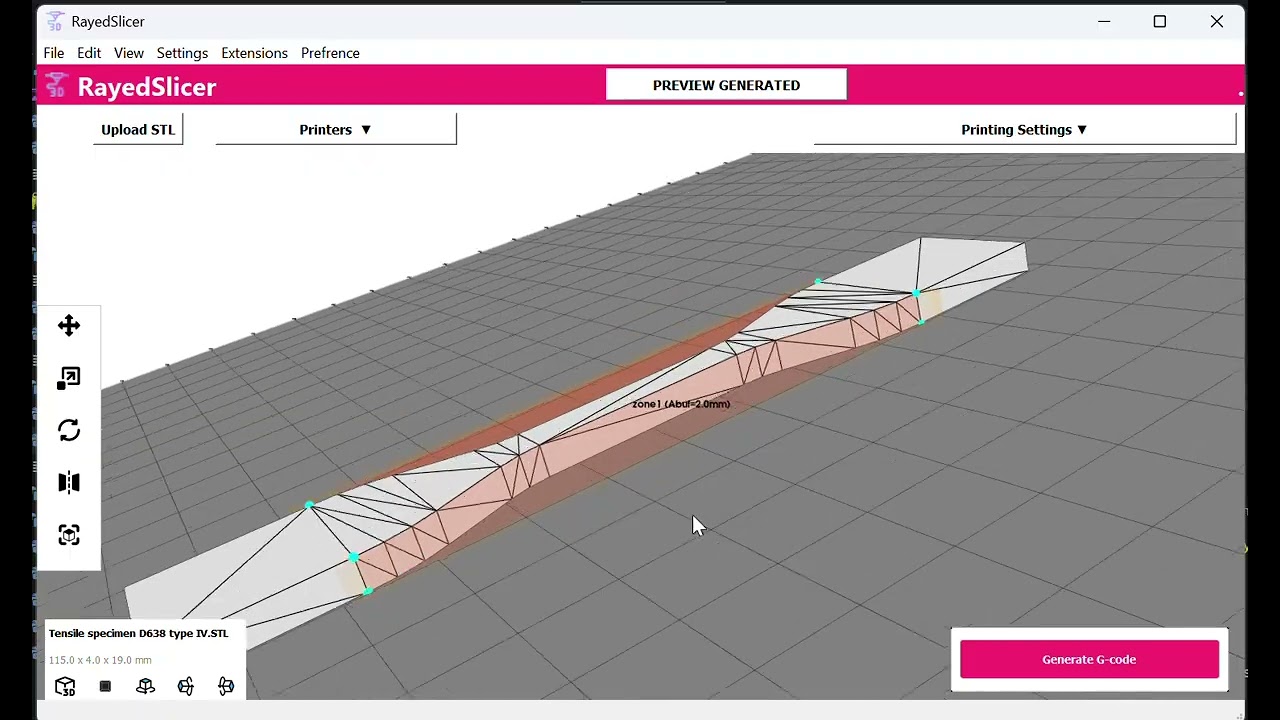
What is Manual Reinforcement Zone Definition?
Manual Reinforcement Zone definition is a "Human-in-the-Loop" (HITL) approach to 3D printing preparation. Instead of relying solely on automated algorithms that might miss the nuances of a part’s intended use, this workflow allows the user to manually define specific areas that require extra strength. By identifying high-stress regions—such as bolt holes, thin walls, or weight-bearing joints—users can instruct the software to increase infill density or wall thickness only where it is truly needed.
Optimizing Your G-code Preparation Workflow
The transition from a 3D model to a physical object relies entirely on the quality of the instructions sent to the printer. During the ARZ workflow, the manual definition of zones acts as a critical layer of customization. This process ensures that the final G-code data contains precise instructions for the print head to adapt its behavior in real-time as it traverses different zones.
By integrating human expertise into the preparation phase, you can create a more "intelligent" pathing strategy. This results in a part that is reinforced exactly where the mechanical load will be highest, while remaining lightweight and cost-effective elsewhere.
The Benefits of Custom G-code Data
The primary advantage of this localized reinforcement technique is the optimization of resources. When you refine your G-code data through manual zoning, you significantly reduce the print time and filament consumption compared to printing a solid or high-density part.
Furthermore, this method provides a level of precision that fully automated slicers often struggle to achieve. Whether you are working on industrial prototypes or functional end-use parts, mastering the manual reinforcement zone definition allows you to push the boundaries of what your 3D printer can produce. By taking control of the zoning process, you ensure that every line of code serves a purpose, leading to superior mechanical performance and professional-grade results.
Visual Insights & Illustrations


