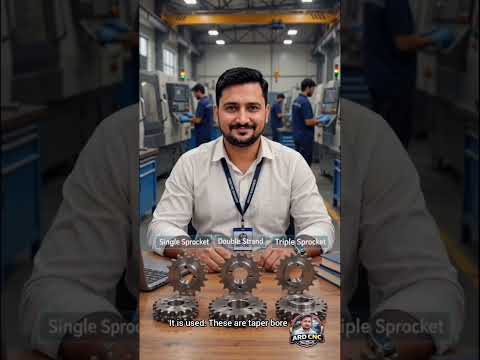
Engineering and industrial manufacturing have evolved dramatically over the past few decades. Today, complex machine parts are crafted with pinpoint precision, thanks to computer-guided automation. If you are eager to learn how modern factories operate, mastering the CNC working principle is one of the most fundamental steps in understanding modern mechanical engineering.
What is CNC Machining?
CNC stands for Computer Numerical Control. In simple terms, it is a manufacturing method where pre-programmed computer software dictates the movement of factory tools and machinery. From lathes and mills to routers and plasma cutters, CNC automation allows complex three-dimensional cutting tasks to be accomplished in a single set of instructions.
How Does the CNC Working Principle Function?
At its core, the CNC working principle relies on converting a digital design into physical movement through a sequence of coded commands. Here is a breakdown of how the process flows:
- Digital Design (CAD/CAM): Engineers start by creating a 2D or 3D blueprint using Computer-Aided Design (CAD) software. This design is then translated into machine code (usually G-code and M-code) via Computer-Aided Manufacturing (CAM) software.
- Controller Processing: The CNC machine's microcomputer receives these coded instructions. The controller acts as the machine's "brain," interpreting the code and determining the exact speed, path, and positioning required.
- Mechanical Execution: The drive system—consisting of stepper or servo motors—moves the machine tools along multiple axes (X, Y, and Z). The cutting tool or workpiece moves precisely according to the programmed commands, carving the final component from raw material.
- Feedback Mechanism: Advanced CNC systems use closed-loop feedback systems to continuously monitor the tool’s position and make real-time micro-adjustments, ensuring flawless accuracy.
Why the CNC Working Principle Matters
Grasping the CNC working principle helps engineers appreciate why automated machinery has largely replaced traditional manual operations. CNC technology delivers unprecedented precision, minimizes human error, increases production speed, and allows for consistent mass production of identical parts.
Whether you are a student exploring mechanical engineering or a technology enthusiast curious about industrial machinery, understanding how digital commands translate into physical motion is essential to navigating the modern manufacturing landscape.


