Introduction to CNC Milling
Computer Numerical Control (CNC) milling has revolutionized precision manufacturing across industries worldwide. By converting digital designs into intricate physical parts, CNC milling machines offer unprecedented accuracy, speed, and repeatability. Whether producing aerospace components or custom automotive parts, understanding the fundamental mechanics of CNC milling is essential for engineers, makers, and industry professionals alike.
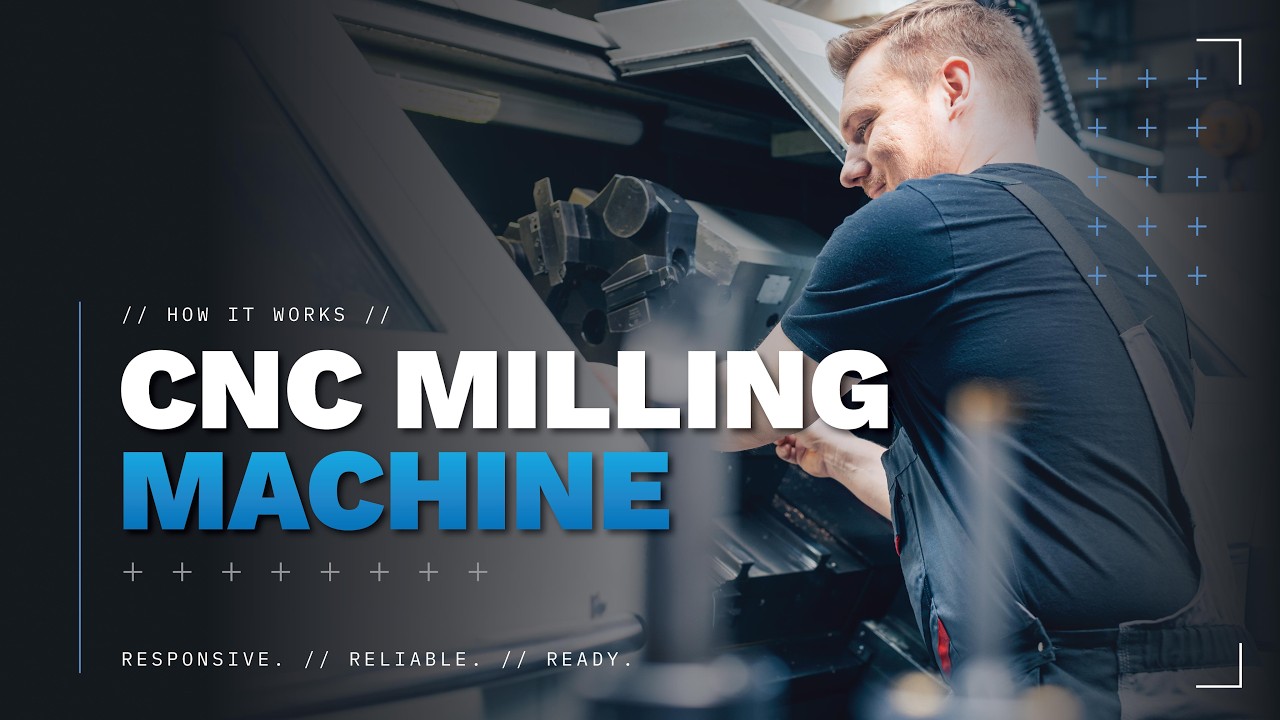
Watch: How It Works - CNC Milling Machine
How CNC Milling Works
At its core, CNC milling is a subtractive manufacturing process. It begins with a solid block of material—known as a workpiece—and removes excess layers using rotary cutting tools until the final geometry is achieved. The entire operation is guided by G-code, a programmed instruction set generated from 3D CAD models.
Key Components of a CNC Milling System
- The Spindle: Holds and rotates the cutting tool at high speeds to shave off material.
- Axis Controllers: Move the workpiece or spindle precisely along multiple directions (X, Y, and Z axes).
- Coolant System: Reduces heat friction during heavy cutting and removes metal chips from the cutting zone.
- Control Unit: The computer interface that reads the code and controls all machine movements.
Conclusion
CNC milling stands as a cornerstone of modern manufacturing technology. Its ability to automate complex subtractive cutting with high precision reduces human error and drastically accelerates production cycles. As technology continues to evolve, multi-axis CNC machines and automated workflows will continue to drive innovation across advanced engineering disciplines.


