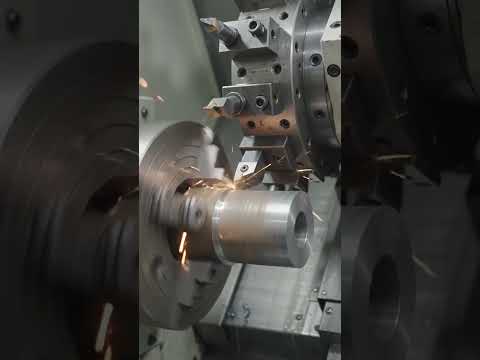
In today's fast-paced manufacturing landscape, precision and efficiency are more critical than ever. Whether you are a student, an engineer, or a business owner looking to optimize production, acquiring accurate CNC info is the best way to understand modern automated manufacturing.
Computer Numerical Control (CNC) technology has completely transformed how raw materials are shaped into intricate, high-precision components across industries like aerospace, automotive, and electronics.
What is CNC Machining?
At its core, CNC stands for Computer Numerical Control. It refers to a manufacturing process where pre-programmed computer software dictates the movement of factory tools and machinery. Instead of relying on manual operators to control lathes, mills, and routers, a CNC machine converts digital designs directly into physical actions. This seamless automation allows for complex three-dimensional cutting tasks to be accomplished in a single set of instructions.
How Does the CNC Process Work?
If you are looking for practical CNC info regarding how these machines operate, the process can be broken down into three main steps:
- Design Creation: An engineer creates a 2D or 3D vector model using CAD (Computer-Aided Design) software.
- Code Conversion: The CAD design is imported into CAM (Computer-Aided Manufacturing) software, which converts the model into G-code—the digital language the machine understands.
- Machine Execution: The CNC machine reads the G-code to control cutting paths, spindle speeds, and tool changes with incredible exactness.
Key Advantages of CNC Machining
- Extreme Precision: CNC machines operate with tight tolerances, often down to thousandths of an inch.
- Unmatched Consistency: Once a program is created, the machine can replicate thousands of identical parts without variation.
- Increased Efficiency: Automated cutting drastically reduces production times and minimizes material waste.
Final Thoughts
Understanding basic CNC info empowers you to leverage one of the most versatile manufacturing methods available today. As smart factories and AI integrations continue to advance, CNC technology remains at the forefront of modern production.


