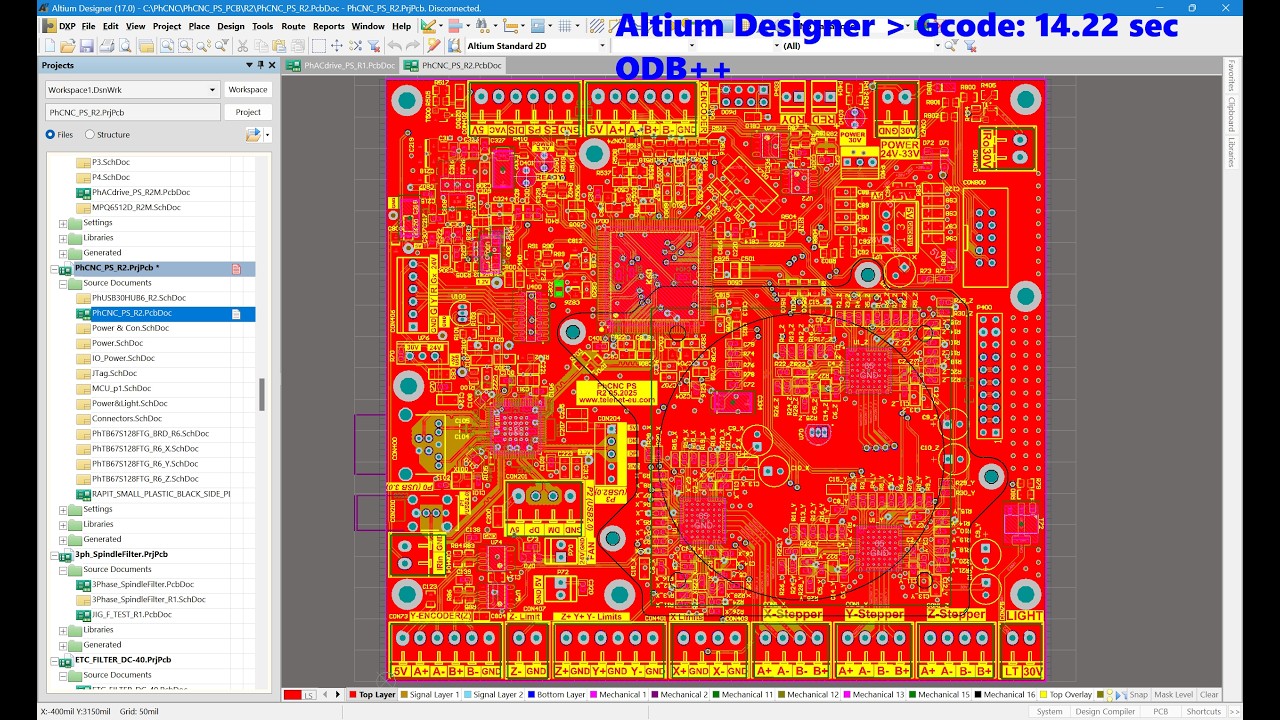
Altium to CNC in Seconds: How to Generate Precise G-code Data Fast
This article provides an in-depth exploration of G-code data, covering foundational concepts, practical applications, and engineering insights.
In the world of printed circuit board (PCB) prototyping, speed and precision are paramount. Moving a design from an EDA software tool like Altium Designer to a CNC milling machine has traditionally required tedious file preparation, manual toolpath setups, and time-consuming conversions. However, modern CAM solutions are completely rewriting the rules of fast-turnaround hardware production.
Streamlining the EDA-to-CNC Workflow
Transitioning your PCB layout into physical hardware usually involves exporting drill files and Gerber layouts before converting them into machine instructions. This multi-step process introduces potential points of error and slows down prototyping cycles.
By leveraging rich data exchange formats like ODB++, modern software can extract all necessary layer geometries, drill definitions, and board boundaries automatically. Utilizing a streamlined pipeline allows software to process complex design files rapidly, outputting error-free G-code data in a matter of seconds rather than minutes or hours.
From Altium to Ready-to-Mill Output in 14.22 Seconds
As demonstrated by PhCNC LSSE, converting a complex, real-world Altium Designer PCB project into CNC-ready code no longer requires a lengthy setup. In a real-time showcase, the software completely processed an ODB++ export and generated fully optimized toolpaths in a staggering 14.22 seconds.
This lightning-fast transformation calculates trace isolation, hole drilling, and board outline routing seamlessly. Instead of struggling with manual CAM parameter adjustments, engineers can rely on automated algorithms to produce accurate G-code data instantly. The result is a frictionless, real-time workflow that keeps your CNC spindle running with minimal downtime.
The Advantage for Rapid PCB Prototyping
For hardware startups, research labs, and agile engineering teams, drastically reducing preparation time directly translates to faster iteration cycles. When high-quality G-code data can be generated in under fifteen seconds, testing multiple design revisions in a single day becomes an effortlessly achievable goal.
Whether you are working on simple single-sided boards or intricate prototypes, integrating automated conversion tools like PhCNC LSSE into your workflow will supercharge your in-house PCB fabrication capabilities.
Visual Insights & Illustrations


