How to Streamline G-code Data Transfer to a PLC Using Python
This article provides an in-depth exploration of G-code data, covering foundational concepts, practical applications, and engineering insights.
Automating motion control systems, such as an XY plotter or a CNC machine, requires precise communication between software trajectories and hardware controllers. While PLCs (Programmable Logic Controllers) excel at real-time motion execution, delivering complex motion commands to them can sometimes be challenging. This is where Python serves as a powerful bridge. By leveraging dedicated Python utilities, engineers can easily read, process, and transmit G-code data directly into a PLC’s memory registers.
Why Use Python for PLC Communication?
G-code is the universal language for computerized manufacturing tools, defining coordinates, speeds, and tool operations. However, PLCs are optimized for high-speed logic execution rather than parsing raw text files. Using a custom Python utility—such as snd_gcode_to_plc.py—allows you to preprocess raw text files and structure the G-code data into byte arrays or registers that the PLC can readily interpret.
How the snd_gcode_to_plc.py Utility Works
The Python utility simplifies the transfer pipeline through a few streamlined steps:
1. File Ingestion: The script opens and parses the generated G-code file, extracting essential coordinates (X, Y, Z) and motion commands.
2. Protocol Formatting: It packages the extracted parameters into an industrial communication protocol (such as Modbus TCP, OPC UA, or Ethernet/IP).
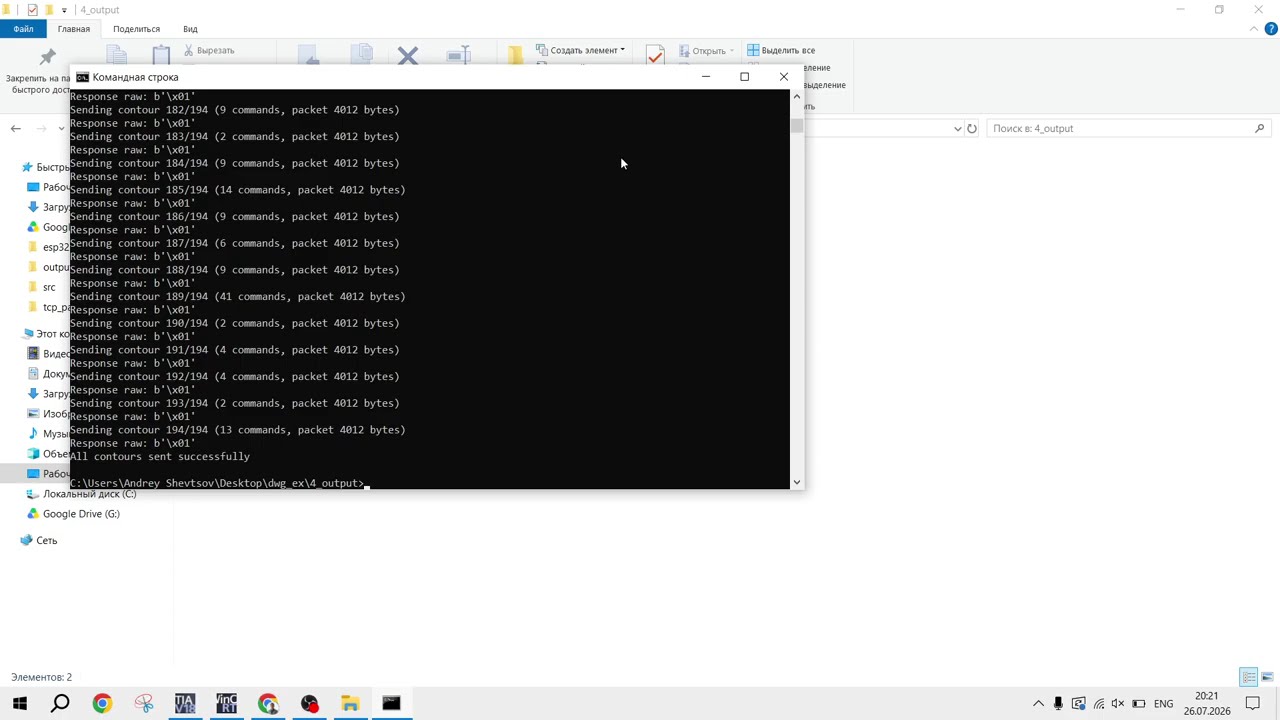
3. Data Transmission: The utility streams the structured G-code data to the target PLC, populating array buffers or FIFO queues for continuous drive execution.
Practical Application: Controlling an XY Plotter
In an XY plotter setup, smooth movement requires reliable data delivery. Once the Python script transmits the trajectory coordinates to the PLC, the controller takes over to manage acceleration, deceleration, and pulse generation for the stepper or servo motors. This separation of duties ensures high-level file handling stays on the host system while deterministic, low-latency motion control happens safely on the PLC.
Conclusion
Integrating Python into your industrial automation stack provides unmatched flexibility. By automating the transmission of toolpaths directly to your hardware, you eliminate manual setup errors and streamline system operations. Try incorporating Python scripts into your next motion control project to build smarter, fully automated workflows.
Visual Insights & Illustrations


