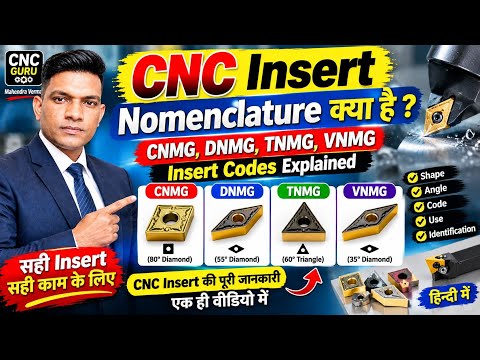
Understanding tooling specifications is a fundamental skill taught in practical CNC training programs. If you have ever looked at a cutting tool box and wondered what codes like CNMG, DNMG, TNMG, or VNMG mean, you are not alone. These alphanumeric codes represent the standard ISO nomenclature system that defines a CNC insert's shape, clearance angle, tolerance, and design features.
Decoding this nomenclature is crucial for selecting the right tool for turning, facing, and profiling operations. Here is a breakdown of what these letters mean and why mastering them is vital for efficient machining.
Decoding the First Letter: Insert Shape
The first letter of a CNC insert code indicates its geometric shape and included angle:
- C: 80° Diamond shape (Excellent for general turning and heavy roughing)
- D: 55° Diamond shape (Versatile for medium turning and profiling)
- T: Triangular shape (Provides three cutting edges for cost-effective machining)
- V: 35° Diamond shape (Ideal for intricate profiling and narrow copying work)
As part of comprehensive CNC training, learning how to read these shapes helps operators choose the ideal balance between tool strength and accessibility to the workpiece.
Understanding the Remaining ISO Code Characters
While the shape is the most visible feature, the following characters in codes like CNMG provide details on performance:
- Second Letter (Clearance Angle): Indicates the relief angle under the cutting edge. "N" stands for 0° clearance (negative insert), offering high strength and double-sided cutting edges.
- Third Letter (Tolerances): Represents manufacturing precision tolerances regarding height, thickness, and corner location (e.g., "M" for medium tolerance).
- Fourth Letter (Type/Fixing): Specifies hole design and chip breaker details (e.g., "G" indicates a center hole with double-sided chip breakers).
Why Tooling Knowledge Matters
Selecting the wrong insert code can lead to poor surface finishes, premature tool wear, or catastrophic tool failure. Understanding insert nomenclature allows machinists to optimize cutting speeds, feeds, and chip control for different materials.
Whether you are an operator looking to upgrade your skill set or a student starting out, investing time in quality CNC training will help you interpret insert specs effortlessly, leading to safer, more precise, and highly efficient machining operations.


