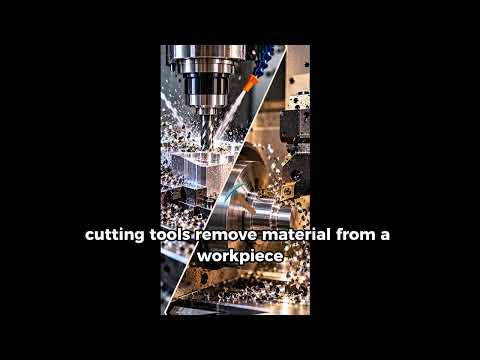
Have you ever looked at a complex metal part or a precision-engineered component and wondered how it was actually made? From the engine parts in your car to the sleek aluminum casing of your laptop, the modern world is built using a process called CNC machining. If you are just beginning your CNC education, understanding this foundational technology is the first step toward mastering the future of manufacturing.
What is CNC Machining?
CNC stands for "Computer Numerical Control." In its simplest form, it is a manufacturing process where pre-programmed computer software dictates the movement of factory tools and machinery. Unlike manual machining—where a human operator guides the cutting tools by hand—CNC machines follow a digital "map" to produce incredibly precise results. This automation allows for the creation of complex 3D shapes that would be nearly impossible to achieve through manual labor.
How the Process Works
The journey from a raw block of material to a finished product typically follows three main steps: 1. Digital Design: An engineer creates a 3D model using CAD (Computer-Aided Design) software. 2. Conversion: The design is converted into a series of numbers and coordinates known as G-code. This is the language the machine understands. 3. Execution: The CNC machine reads the G-code and moves its cutting tools along various axes to shave away material until the final part is formed.
Why CNC Education Matters
In today’s industrial landscape, the demand for high-precision parts is higher than ever. Industries such as aerospace, medical device manufacturing, and automotive engineering rely almost exclusively on CNC technology. By prioritizing your CNC education, you are gaining a skill set that sits at the intersection of traditional craftsmanship and high-level computer science.
Precision is the hallmark of CNC. Because the machines are controlled by software, they can repeat the same movement thousands of times with a margin of error thinner than a human hair. This level of consistency is what makes modern mass production possible.
Conclusion
Whether you are a hobbyist or a student looking to enter the workforce, starting your CNC education opens doors to a world of creative and technical possibilities. While the machines are complex, the basic concept is simple: it’s about using the power of computers to shape the physical world with unmatched accuracy. Stay tuned for more deep dives into the world of precision machining!


