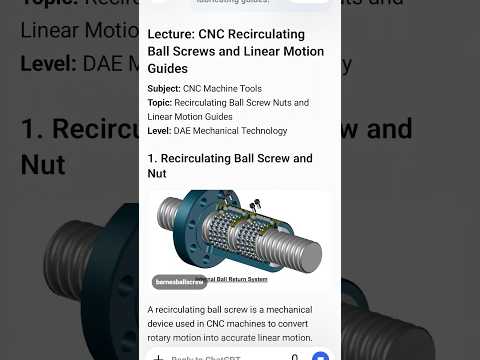
In modern manufacturing, precision and smooth operation are critical for achieving high-quality surface finishes and tight tolerances. Linear Motion (LM) guides play an essential role in supporting and directing moving machine components along a straight path with minimal friction. Whether you are a mechanical engineering student or a practicing technician, understanding these components is vital. This practical CNC guide breaks down the primary types of linear motion guides used in automated machinery.
What is a Linear Motion Guide?
A linear motion guide is a mechanical assembly designed to facilitate smooth, accurate linear movement while carrying heavy structural loads. By replacing traditional sliding friction with rolling or fluid friction, these guides significantly reduce power consumption, minimize mechanical wear, and enhance the overall lifespan of machine axes.
Key Types of Linear Motion Guides
Linear guides are primarily categorized by their design and the type of rolling elements they utilize:
- Ball-Type Linear Guides: Featuring spherical steel balls inside a circulating block, ball guides provide extremely low friction and support high-speed movement. They are ideal for light to medium-duty machining where speed and positioning accuracy are paramount.
- Roller-Type Linear Guides: These guides replace spherical balls with cylindrical rollers. Because rollers create a line contact rather than a point contact, they offer significantly higher rigidity and load-carrying capacity, making them suitable for heavy-duty industrial machinery.
- Box / Flat Slideways (Plain Bearing Guides): Traditional box ways rely on direct sliding contact cushioned by a lubrication film. While they offer superior vibration damping during heavy cutting operations, they experience higher friction and lower speed capabilities compared to rolling-element guides.
- Hydrostatic Linear Guides: Hydrostatic guides use a continuous pressurized film of oil to separate the moving surfaces, eliminating direct metal-to-metal contact. This results in zero stick-slip effect and extraordinary damping performance for ultra-precision equipment.
Optimizing Machine Performance
Selecting the correct guidance system depends on your specific application requirements, including payload capacity, desired feed rates, dynamic stiffness, and environmental conditions. Referencing a comprehensive CNC guide when designing or maintaining equipment ensures you select the right linear motion system to maximize operational efficiency and maintain long-term machining accuracy.


