CNC vs. VMC: Essential CNC Info Every Engineer Needs to Know
This article provides an in-depth exploration of CNC info, covering foundational concepts, practical applications, and engineering insights.
Modern manufacturing relies heavily on automated precision, making computer numerical control a cornerstone of the industry. For aspiring engineers and technicians, gathering accurate CNC info is the first step toward building a successful career in machining and programming. However, a common point of confusion often arises during training: What is the real difference between a traditional CNC machine and a VMC?
Understanding CNC vs. VMC
To clear up the confusion, it helps to understand that a VMC (Vertical Machining Center) is actually a specialized category under the broader umbrella of CNC machines.
- CNC Machine: Refers broadly to any machine controlled by a computer code. In general workshop terminology, people often use "CNC machine" to refer specifically to CNC turning centers or lathes, where the workpiece rotates against a stationary cutting tool.
- VMC (Vertical Machining Center): A specific type of CNC milling machine where the spindle axis is vertically oriented. In a VMC, the cutting tool rotates vertically while the workpiece stays clamped on a moving table.
Key Distinctions Every Engineer Should Know
If you are evaluating which technology fits your project or career path, here is crucial CNC info regarding their operational differences:
- Workpiece Geometry: CNC turning centers are designed for cylindrical or symmetrical parts like shafts, bushings, and pins. In contrast, VMCs excel at flat surfaces, prismatic shapes, pocketing, and multi-side milling.
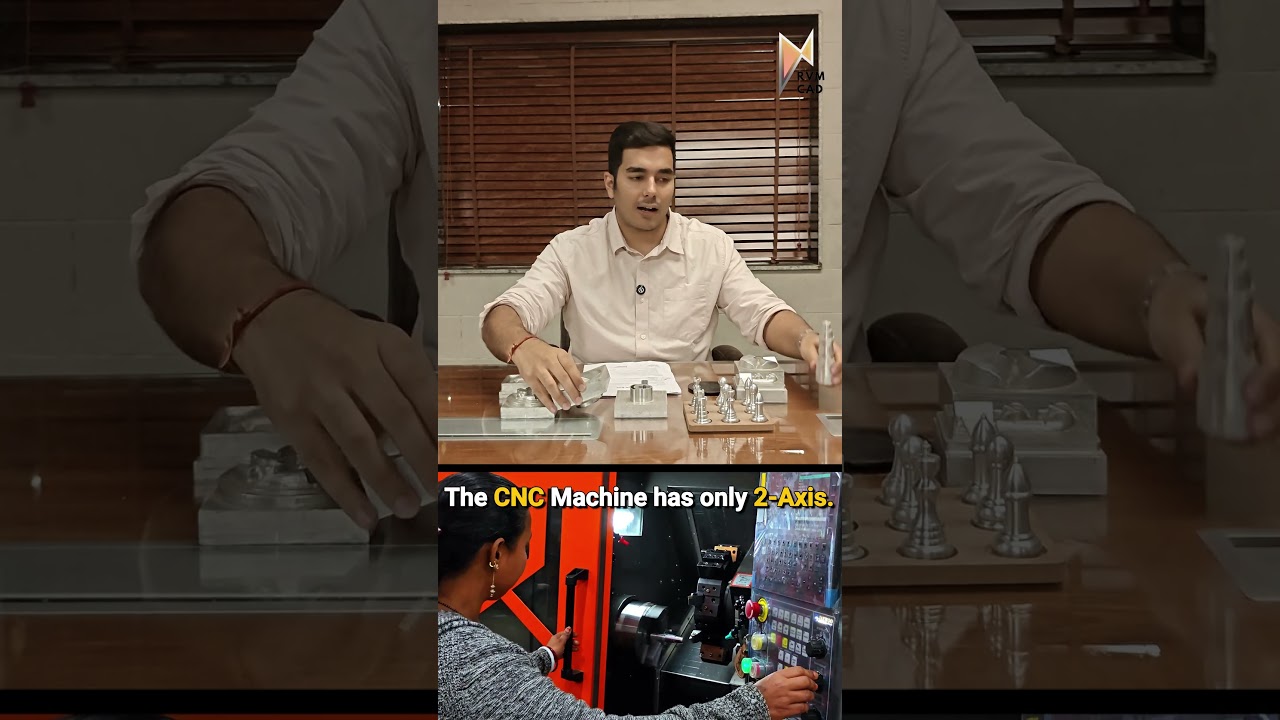
- Axis Movement: Standard CNC lathes typically operate on 2 axes (X and Z). VMCs usually operate on at least 3 axes (X, Y, and Z) and can extend to 4 or 5 axes for highly complex aerospace or automotive components.
- Tooling Options: VMCs come equipped with an Automatic Tool Changer (ATC) holding dozens of milling cutters, drills, and taps, allowing complex multi-operation jobs without manual intervention.
Which One Should You Learn First?
Deciding whether to learn CNC turning or VMC programming depends on your career goals and local job market demands. Learning 2-axis CNC lathe programming is often easier for beginners to grasp fundamental G-code and M-code logic. However, mastering VMC programming opens doors to advanced multi-axis machining and high-level CAM (Computer-Aided Manufacturing) design roles.
Ultimately, having clear and reliable CNC info equips you to make smarter educational choices and significantly advances your industrial engineering capabilities.


