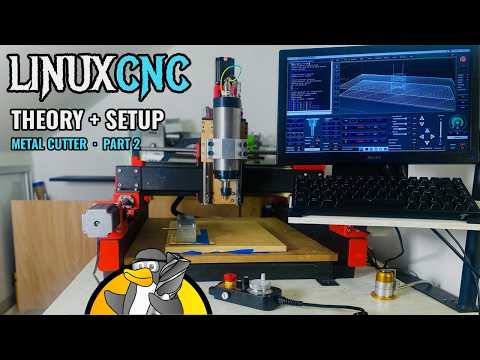
Building a custom metal-cutting machine is one of the most rewarding projects a maker can undertake. While assembling the mechanical frame is a challenge of its own, configuring the electronics and control system often poses the biggest hurdle. In this guide, we break down how to create a high-performance DIY CNC setup powered by LinuxCNC and the Mesa 7i96s ethernet breakout board.
Why Choose LinuxCNC and the Mesa 7i96s?
When cutting hard materials like aluminum or steel, real-time control and low latency are non-negotiable. Standard USB-based controllers can suffer from signal drops or latency spikes under heavy electrical noise.
By contrast, the Mesa 7i96s connects via Ethernet, offloading high-speed step and direction pulse generation directly to the board's FPGA chip. Paired with LinuxCNC—a open-source, industrial-grade soft real-time control system—this hardware combination provides unmatched stability, speed, and precision for DIY machinists.
Essential Components for a Metal-Cutting Build
To achieve smooth operations in your CNC setup, key elements must work in harmony:
- Frame Rigidity: Heavy-duty aluminum extrusions or steel tubes to withstand cutting forces.
- Motion Control: Mesa 7i96s FPGA board coupled with microstepping drivers and powerful stepper or servo motors.
- Software Integration: LinuxCNC running on a dedicated low-latency Linux PC.
- Enclosures and Custom Parts: Protective enclosures for wiring, often rapid-prototyped using custom 3D prints or specialized plates.
Configuring Your System for Precision
Setting up the Mesa 7i96s with LinuxCNC requires modifying configuration files (the .ini and .hal files). This allows you to define your machine's physical limits, scale factors, homing routines, and spindle controls.
Taking the time to calibrate your motor steps per millimeter and tuning motor acceleration will prevent lost steps during heavy cuts. A properly tuned CNC setup ensures consistent accuracy, enabling you to produce clean, repeatable metal parts right out of your workshop.
Final Thoughts
While building your own CNC router or mill demands patience and testing, the result is an industrial-capable machine at a fraction of commercial costs. With LinuxCNC and Mesa hardware at the core of your build, you have complete control over your machine's capabilities and future upgrades.


