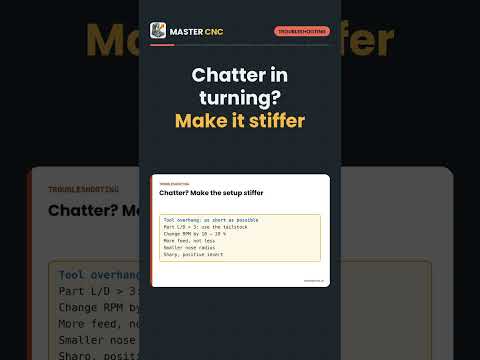
When it comes to CNC troubleshooting, few issues are as frustrating for machinists as lathe chatter. That high-pitched squeal and distinct wavy pattern left on your workpiece can quickly turn a high-precision job into scrap metal. Understanding what causes this harmonic vibration—and knowing how to eliminate it fast—is essential for maintaining peak productivity and extending tool life.
Identifying Lathe Chatter vs. Surface Finish Problems
Before jumping into solutions, it is crucial to properly diagnose the issue. Chatter is a self-excited harmonic vibration occurring between the cutting tool and the workpiece.
Unlike standard feed marks (which present as uniform, orderly lines) or built-up edge issues (which leave torn, cloudy surface patches), chatter produces an unmistakable repeating wave or grid pattern on the turned surface. If your part looks ribbed and your machine sounds like it is screaming, you are dealing with chatter.
Key Causes and Practical Fixes
Effective CNC troubleshooting requires a systematic evaluation of your setup rigidity and cutting parameters. Here are the primary culprits and how to resolve them:
- Excessive Tool and Workpiece Overhang: Long stick-outs reduce rigidity and act like a tuning fork.
- Fix: Retract the tool holder as far into the turret as possible, and use a tailstock or steady rest for extended workpieces.
- Suboptimal Speeds and Feeds: Operating at resonant frequencies amplifies vibration.
- Fix: Adjust your spindle speed (RPM) up or down by 10–15% to break the harmonic wave. Increasing the feed rate can also increase chip load and stabilize the cut.
- Inadequate Workholding Rigidity: Weak clamping allows microscopic workpiece movement during turning.
- Fix: Check chuck pressure, inspect jaw wear, and ensure the workpiece is firmly secured.
- Incorrect Tooling Geometry: Large nose radii and negative rake angles create higher radial cutting forces that push the tool away.
- Fix: Switch to an insert with a smaller nose radius or a sharper, positive rake geometry to reduce cutting resistance.
Master Your CNC Setup
Addressing vibration early prevents premature tool wear, spindle damage, and costly material scrap. Making these simple mechanical and parameter adjustments a core part of your CNC troubleshooting workflow will ensure smoother surface finishes and reliable machining results on every project.


