CNC router can perform the 3d carving, modeling deocration and 3D model. See following details for cnc router can do on 3d carving. •console, pilasters, capitals, rosettes •decor for the door portals and door panels •elements for furniture •carved decoration for interiors •frames for mirrors and paintings •carved moldings •3D panels •lattice slotted, decorative screens and partitions •2D decor CNC router can perform 3D decorative elements with 3D carvings: wooden capitals and carved console, brackets, pilasters, panels, ornaments, moldings and frames for mirrors and paintings, carved rosettes, carved icons and much more. List of product with 3D decorations: • Carved capitals, brackets, console;
Product Suggest, click it for details:
• Carved panels, ornaments:
Product Suggest, click it for details:
• Baguettes, frames for mirrors and paintings:
Product Suggest, click it for details:
• Central overhead elements with 3D carving:
• Coats of arms and cartouches:
Product Suggest, click it for details:
• Carved architraves, 3D moldings:
Product Suggest, click it for details:
• Rosettes round and square carved rosettes:
Product suggest, click it for details:
• Corner elements:
Product suggest, click it for details:
• Slotted grating:
Product suggest, click it for details:
• High relief:
Product suggest, click it for details:
3D modeling is performed according to the drawings, sketches, photographs, or by Layout - prototypes required products.
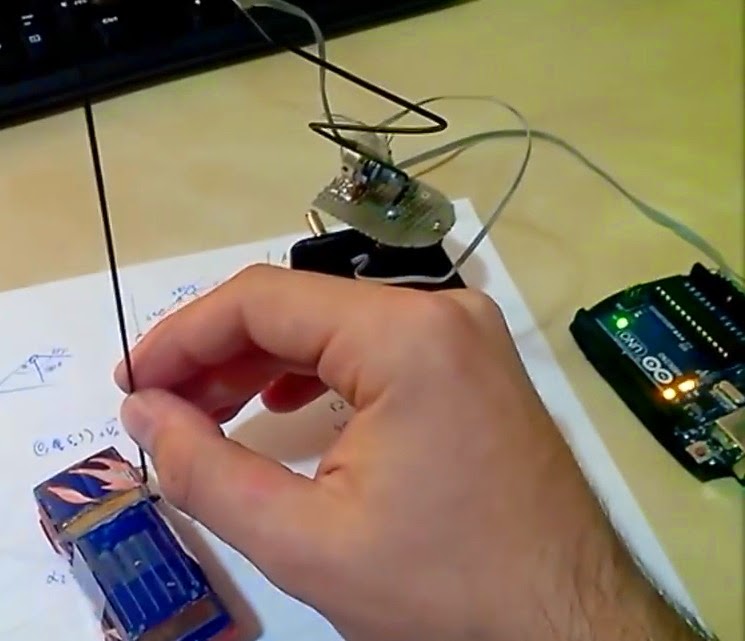
Stewart platform is a multi-purpuse robotic platform that is movable in six axis. This machine could be used in all sorts of project where you need multiaxial kinematics. I could see it even being used as part of a 3d printer.
Nicholas Pajerski made a tutorial on Instructables describing how to build a desktop Stewart platform with lasercut and 3d printed parts. It is controlled by Arduino and uses linear actuators enabling it to carry heavier loads.
Detailed build guide and all the parts files can be found at:
CloudDDM is a company that operates like most 3D printing services where you can order parts through a web interface, but they're able to produce any part at high volumes and speed. They've recently opened a 3D printing factory inside UPS international hub in Louisville USA with one hundred 3D printers and plans to increase to a thousand. The machines run 24/7 and all the logistics are handled by UPS. They print in several materials like: ABS, Polycarbonate (PC), Polycarbonate-ABS (PC-ABS) and ULTEM 1010 with several color options.
CloudDDM 3D printers. DDM stands for "Direct Digital Manufacturing". Image source: CNN
Now the truly amazing (or frightening) thing about this factory is that it is highly automatized and operated by only THREE WORKERS! 3 people! 3! One per eight hour shift! Is this a new trend? Factories without ANY workers?
Lots of 3d printers and robots producing and only a few people designing and carrying furniture. They look out of place and almost like decoration. I'll write about future of design work in future post about this topic ... but don't think machines can not design stuff also ...
Materialise has a 3D printing "factory" facilities with what looks like more people working:
But this is not a pure "factory" but more diverse design and production center with design, product development and engineering personnel. Another point is that they probably displace many "traditional" workers as they use cutting edge technology and logistics. Maybe even several orders of magnitude more then they employ. If you look closely you will find that even some of the workplaces showed in this video could be automated now or replaced by machines in couple of years.
Are we seeing a start of 3D printing factories replacing industrial workers? In the '90ties during the first dot-com bubble people predicted that the postal services will disappear because of email communication but they were wrong since they took over the much increased package shipments due to rise of e-commerce. Could this happen again with increased volume of 3D printed products? Probably not.
Why?
Because the whole transport logistic sector is getting automatized! Deimler just presented their autonomous truck and the state of Nevada is supporting it with new autonomous vehicle legislation. Even the company said it will take some 10 years to have fully autonomous trucks on the roads with major regulatory obstacles but they are moving in that direction with most of the other tech companies like Tesla and Google. Do keep in mind that "truck driver" is most common profession in the USA with more than 9 million employed in the trucking industry or 1 in every 13 employed Americans.
Is this onset of technological unemployment unfolding in real life?Technological unemployment (or desourcing) is defined as a process of unemployment being caused mainly by technological advances. It is a controversial theory that has yet to be confirmed or disproved.
In 2014 Pew Research surveyed 1,896 technology professionals and economists and found a split in opinions: 48 percent of them believed that new technologies would displace more jobs than they would create by the year 2025, while 52 percent maintained that they would not. The implications of it being a reality would have HUGE societal impact on a global scale. What jobs are future proof?
Future will be interesting. Stay smart and think about all the possible scenarios!
As I live in a country with very high unemployment I have very personal interest in this topic and I think it is very important to investigate it and stay informed about it.
Do you think your job could be done by a machine or software? Share your opinions in comment section
Update (07.02.2016.):
Siemens opened first European 3d printing factory in Sweden. The €21.4 million facility, located in Siemen’s industrial plant in Finspång, Sweden will have 20 employees and multiple industrial grade metal 3d printers. The factory will produce prototypes, end-product parts and replacement parts for repair focused on gas turbines. Thorbjorn Fors, global business director for Distributed Generation at Siemens, said of the facility:
“With this investment, we can develop new and improved components and repairs, for example burner tips to serve our industrial gas turbine SGT-800, significantly faster. Using this innovative approach, we will shorten repair times from months to weeks. It is an important step in our ability to respond to the needs of our customers.”
As we see there are more 3d printing factories being build with very small number of workers. This is also a start of the change in the Europe.
Siemens 3d printing factory in Sweden. Looks very clean. And empty of people.
Update (15.04.2016.):
There are more 3D printing factories and production / prototyping centers being opened all over the world:
Airbus opened one in the Ludwig Bolköw Campus near Munich.
From the source:
The Aerospace Factory, as the new 3D printing center at the facility is being called, will be based out of the Ludwig Bolköw Campus, an industry and university collaborative venture located on-site. The location will be used to research the 3D printing of endparts for use in aerospace through work performed by a number of important players including: Airbus Safran Launchers; metal 3D printer manufacturer EOS; engine maker MTU Aero Engines; the Technical University of Munich and its Institute for Machine Tools and Industrial Management; Airbus Group Innovations; the Fraunhofer Development Center for X-ray Technology (EZRT); Industrieanlagen-Betriebsgesellschaft mbH (IABG); Airbus subsidiary APWorks; virtual prototyping firm the ESI Group; and the Airbus Endowed Chair for Integrative Simulation and Engineering of Materials and Processes (ISEMP) of the University of Bremen.
GE opened 200 M USD advanced manufacturing centre in Pune, India.
From the source:
In 2015, GE unveiled its $200 million, Multi-Modal advanced manufacturing facility in Chakan, Pune, part of the western Indian state of Maharashtra. Dubbed a “brilliant factory” by its creators, the facility was established to produce jet engine parts, locomotive components, wind turbines, and a host of other additively and traditionally manufactured components for a number of GE companies. The facility now employs around 1,500 workers, responsible for operating 3D printers and other machinery. "The idea is to service a multitude of businesses—from oil and gas, to aviation, transportation, and distributed power—all under the same roof," said GE's Amit Kumar, overseer of the Multi-Modal facility, via TechRepublic.
The Multi-Modal facility provides GE with several advantages. By bringing a number of interconnected operations under one roof, the company will allegedly save up to ten times as much money than if it had established individual facilities for separate business lines. The facility is also helping to bring plastic and metal additive manufacturing technology to its India operations, an advancement which offers the company huge flexibility and cost-saving potential.
Eventually, the Pune facility will produce critical end-use components such as the jet engine fuel nozzle, but it will first service a more urgent need: 3D printing replacement parts for broken machinery—parts that would otherwise have to be made in bulk and stored, or sourced from an external supplier. Replacement parts, especially for older appliances, can be incredibly difficult to source when those appliances are discontinued or simply made in small quantities. 3D printing these replacement parts is much faster than producing them using traditional manufacturing techniques, with previous timescales of three to five months reduced to around one week when additive manufacturing is implemented
GE Oil & Gas is opening new 3D printing factory line with advanced robotics in Talamona, Italy. It is investing some 10 million USD in new production lines to 3D print burners for gas turbine combustion chambers and other advanced components such as nozzles. These new advanced manufacturing lines establishes this site as a center of excellence for the oil and gas industry. It also used advanced production software to manage the factory.
“The use of automated production and new techniques like additive manufacturing allow us to develop parts and products more efficiently, precisely and cost-effectively, accelerating the speed at which we can bring product to market,” said Davide Marrani, general manager for manufacturing for GE Oil & Gas’ Turbomachinery Solutions business line.
“The opportunities for the application of additive manufacturing and 3D printing in the oil and gas industry are only just starting to be explored, and it will require an ongoing rethink of component design and production approach,” said Massimiliano Cecconi, GE Oil & Gas Materials & Manufacturing Technologies Executive.
As factories as growing so is the software ecosystem that connects them B2B and B2C. Fast Radius has developed "virtual inventory" software for their 3d printing factory. It enables companies to deliver parts "on demand" and "just in time". Rick Smith from Fast Radius said:
“On average, the rule of thumb for the cost of holding physical inventory is about 25 percent the cost of the part per year,” he explained. “There is a significant cost in terms of cost of capital, warehousing space, security and damage. The other major problem with physical inventory is that you’ve got to produce in large volumes to get the unit costs low. This works great when you’re producing iPhones and you know you’re going to sell 10 million of them. But, when all of a sudden you’ve got an essential part and you know you’re only going to need 15 of them per year—maybe it’s a critical part to a machine in a manufacturing operation that doesn’t break very often, but is extremely important when it does break—then it doesn’t make sense to go through the setup and all of the costs related to doing a larger-scale production.”
The centralized manufacturing model of the 20th century may not be done away with soon, but the shift is already under way. To introduce its 3D printing services to potential OEMs, Fast Radius has partnered with about a dozen companies that are looking to make the shift to a virtual inventory. “To start,” Smith explained, “the companies that we’re working with are identifying 1,000 or 1,500 parts that are excellent candidates for on demand production. This may be a small percentage of their overall inventory, but as costs drop precipitously and quality continues to rise over time, these companies know that a larger and larger percentage of physical inventory will be moved to a virtual inventory model.”
Instructables user focamonca published two low cost DIY projects for you photography geeks out there. They are easy and very affordable: he made a DSLR shoulder rig and slider for some 200 dollars each.
Micheal, well known for his TestrBot made another useful and easy DIY project that enables you to build ultrasonic vapor polisher for your 3d printed objects.
Here is the project summary:
What's needed is a better solvent application method, and that's what this Instructable is about.
The current vapor polishing methods and their drawbacks include:
Hot treat via boiling solvent in a crock pot or similar chamber (Potentially dangerous and very hands-on process)
Cold treat via slow release of solvent from paper towels in an enclosed container (Very time consuming, can't observe parts during this process.)
Spray canned solvent aerosol onto part. (Inconsistent surface finish, must be done outside)
Dipping parts directly into liquid solvents (Unpredictable/inconsistent finish, Likely over exposure of part)
All I wanted is a machine that lets me quickly drop parts into a transparent container and be able to press 'go' and have the machine produce a predictable finish on its own. I do not want to have to put together a really involved setup that may be a fire hazard, fume hazard, or something that produces unpredictable surface finishes. Essentially I want something as convenient as a microwave. I'm also forgetful so I don't want my parts to be destroyed if I forget that I left them in the machine.
The Ultrasonic Misting 3D Vapor Polisher is the solution to all of these problems.
This key component of this machine comes from ultrasonic humidifier, which uses a piezoelectric transducer (like a speaker) to create a high frequency mechanical oscillation in a liquid. This vibration forms an extremely fine mist of droplets in a fog/mist. The density of the fog is controlled by varying the intensity of the vibrations via a potentiometer.
This fog mist is very dense and wont move far on its own, so I used an aquarium air pump to blow it from the misting chamber into the glass finishing chamber where it can condense on the 3D printed part. This airflow keeps the air moving inside the finishing chamber, which helps produce a consistent finish on the part. The airflow system is open by necessity but we do not want the exhaust air to become a fume hazard so there is a water bubbler on the exhaust to absorb excess solvent. (Note that this only protects you when using water miscible solvents such as acetone.)
Here is the video of machine in action and results of the treatment:
The vapor treatment resulted in a consistent overall weakening of the test specimens. Specimens that had not been treated with Acetone vapor had an average yield stress 24% higher than those treated with the vapor.
Solvents that can be used to polish different materials:
ABS: Acetone
Acrylic: Most Solvents
PLA: MEK or 'MEK Substitute'
PVA: Water
PVC: Most Solvents
Polycarbinate: Pretty solvent resistant
Nylon: Pretty solvent resistant
Polypropylene: Pretty solvent resistant
Polyethylene: Pretty solvent resistant
Stay safe people! Chemicals are dangerous! You can check this chart showing dangerous combinations:
OPAM is a new all metal jot end with water cooling from Singapore developed by Leong Khit. It will be open sourced when the Indiegogo campaign finishes.
The design is simplified by:
Combining the nozzle, heater block and heat sink into 1 single piece of SS304
Using water cooling as it is far more effective than air cooling
Removing any PEEK or PTFE material
The benefits of a One Piece design are as follows:
No leaks/jams between the nozzle and heater block's contact surface
No galling of the nozzle's thread (since it is built-in as part of the design)
Key Features:
1 piece construction (the nozzle, heater block & heat sink is combined into 1 single piece of SS304) to eliminate jams
Water-cooled for high temperature extrusion of up to 350°C
Short & Sharp transition from cold to hot portion (just 4mm)
Built-in stainless stain nozzle
Compact design (Light weight of 40 grams) for high speed printing
Platener is a project from team working in Hasso-Plattner Institute that combines laser cutting of simple surfaces and combining them with 3d printed complex curved parts to get very fast manufacturing or prototyping.
SPRING Technologies, vendor of solutions that maximize the productivity of NC machine tools is attending Moulding Expo, in Stuttgart, starting today May 5th until May 8th.
Booth A77, Hall 4
The SPRING Technologies team will be available to do demonstrations of the main modules in the NCSIMUL SOLUTIONS range, notably the latest versions of NCSIMUL Machine, NCSIMUL Tool and NCSIMUL DNC.
"Our flexible software solutions increase the productivity of NC machining centres by optimizing machining processes", explains Olivier Bellaton, Managing Director of SPRING Technologies. "They offer the possibility of simulating production processes, thus minimizing manufacturing deficits in advance which would otherwise have caused damage to the machine and unnecessary costs."
Here is a great video tutorial on how to use FreeCAD to design two colored (or dual material or support structures) 3d objects for dual extruders. It could be also used for other CAD programs.
Here is a nice little 3d scanner made from various scrap parts and Arduino. It is a simple contact 3d scanner that produces a pint cloud in FreeCAD.
It uses only three potentiometers and two steel rods, and the same potentiometers are also rotational joints. Arduino is sending the current value of the potentiometers to the python script, which calculates the mechanism position and draws the points inside FreeCAD.
Here is a new simple and low cost machine project by Almus Yang. It has laser cut plywood frame and acrylic structural parts, it has no 3D printed parts. It can be sourced for some 200 USD on low cost parts sites like Alibaba.
There are still no reviews or third party tests but comments on forums are very positive and Wanhao is considered one of the better Asian manufacturers.
Update:
Here is a review of Wanhao Duplicator i3:
Here are some mechanical upgrades and modifications by Vernon Barry:
Here is a guide on how to level and calibrate the platform (sound is low quality but you can use it):
Here is a tutorial on how to use Cura with Wanhao Duplicator i3:
Here isa review by Thomas of a Malyan M150, a 3d printer that looks like a clone of a first version of Wanhao i3. it goes trough several problems and safety issues including possible false certification issues.
Update (18.09.2016.):
Looks like Wanhao issued a recall for their Replicator due to some safety problems. Surprise surprise. Here is the link to recall and repair instructions:
 • Carved panels, ornaments:


 Product Suggest, click it for details:


 Product Suggest, click it for details:


 Product suggest, click it for details:

 Product suggest, click it for details:


 Product suggest, click it for details:

 Product suggest, click it for details: